Sebanyak 2796 item atau buku ditemukan

The Body Remembers Continuing Education Test: The Psychophysiology of Trauma & Trauma Treatment

For both clinicians and their clients there is tremendous value in understanding the psychophysiology of trauma and knowing what to do about its manifestations. This book illuminates that physiology, shining a bright light on the impact of trauma on the body and the phenomenon of somatic memory. It is now thought that people who have been traumatized hold an implicit memory of traumatic events in their brains and bodies. That memory is often expressed in the symptomatology of posttraumatic stress disorder-nightmares, flashbacks, startle responses, and dissociative behaviors. In essence, the body of the traumatized individual refuses to be ignored. While reducing the chasm between scientific theory and clinical practice and bridging the gap between talk therapy and body therapy, Rothschild presents principles and non-touch techniques for giving the body its due. With an eye to its relevance for clinicians, she consolidates current knowledge about the psychobiology of the stress response both in normally challenging situations and during extreme and prolonged trauma. This gives clinicians from all disciplines a foundation for speculating about the origins of their clients' symptoms and incorporating regard for the body into their practice. The somatic techniques are chosen with an eye to making trauma therapy safer while increasing mind-body integration. Packed with engaging case studies, The Body Remembers integrates body and mind in the treatment of posttraumatic stress disorder. It will appeal to clinicians, researchers, students, and general readers.

This book illuminates that physiology, shining a bright light on the impact of trauma on the body and the phenomenon of somatic memory.

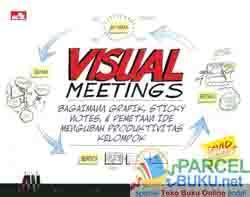
Visual Meetings

How Graphics,Sticky Notes & Idea Mapping Can Transform Group Productivity

Omnium-gatherum

Philosophical Essays Dedicated to Jan Österberg on the Occasion of His Sixtieth Birthday

Zimmerman (1998) reports Noah Lemos' suggestion that a fact may be seen as
the obtaining of a state of affairs, where the obtaining of a state of affairs is not the
same as its mere existence. Insofar as we can refer to a state, such as, say, John
is happy, that state exists. But it need not obtain; as things are, John might be a
very unhappy person. If a state of affairs S obtains, the obtaining of S is a fact.5
Zimmerman thinks that this characterization of facts as obtainings of states of
affairs is ...

Imagining Serengeti

A History of Landscape Memory in Tanzania from Earliest Times to the Present

Many students come to African history with a host of stereotypes that are not always easy to dislodge. One of the most common is that of Africa as safari grounds—as the land of expansive, unpopulated game reserves untouched by civilization and preserved in their original pristine state by the tireless efforts of contemporary conservationists. With prose that is elegant in its simplicity and analysis that is forceful and compelling, Jan Bender Shetler brings the landscape memory of the Serengeti to life. She demonstrates how the social identities of western Serengeti peoples are embedded in specific spaces and in their collective memories of those spaces. Using a new methodology to analyze precolonial oral traditions, Shetler identifies core spatial images and reevaluates them in their historical context through the use of archaeological, linguistic, ethnographic, ecological, and archival evidence. Imagining Serengeti is a lively environmental history that will ensure that we never look at images of the African landscape in quite the same way.

Cultural vocabulary list, Mbiso and Bugerera, 1995–96. Makacha, Stephen.
IKONA. “Extending Robanda Wildlife Management Area Now Called IKONA to
Cover Four Villages, Mugumu District, Mara Region, Tanzania (Robanda,
Nyichoka, Makundusi/Nyakitono, and Nattambiso).” Report to Pia Zimmerman c/o
Frankfurt Zoological Society, May 1999, SNP, TZ. Maregesi, Andrew B., Afisa
Misitu, and Msaidizi Mwandamizi. Lengo la Serkikali kuwashirikisha wananchi
katika Uhifadhi was ...

Econometrics

Originally published in 1951, this volume reprints the classic work written by one of the leading global econometricians. Econometrics is structured as followed: Part 1 explains the relationship of Econometrics to Economics and Statistics. Part 2 outlines the process of formulating economic hypotheses mathematically and of subjecting them to a statistical test. Part 3 deals with the various component equations of the economic system - the psychic reactions, technical relations and reactions of business life and describes the process of setting up an economic model of the system as a whole. Part 4 llustrates the use of econometric methods for policy purposes.

In this connection the fact pointed out by Zimmerman* is important that before
1910 railway investments formed a much more important part of total investments
than after that year. § 38. Substitution Elasticities In commercial relations— which
belong to the field of "objective" decisions described in § 36— competition still
plays an important role and consequently also the substitution elasticity between
products supplied by competing firms or countries. The trade of a small country in
 ...

Nonprofit Sustainability

Making Strategic Decisions for Financial Viability

Praise for NONPROFIT SUSTAINABILITY "This is much more than a financial how-to book. It's a nonprofit's guide to empowerment. It demystifies mission impact and financial viability using The Matrix Map to provide strategic options for any organization. A must-read for every nonprofit CEO, CFO, and board member." —Julia A. McClendon, chief executive officer, YWCA Elgin, Illinois "This book should stay within easy reaching distance and end up completely dog-eared because it walks the reader through a practical but sometimes revelatory process of choosing the right mix of programs for mission impact and financial sustainability. Its use is a practice in which every nonprofit should engage its board once a year." —Ruth McCambridge, editor in chief, The Nonprofit Quarterly "Up until a few years ago, funding and managing a nonprofit was a bit like undertaking an ocean voyage. Now, it's akin to windsurfing—you must be nimble, prepared to maximize even the slightest breeze, and open to modifying your course at a moment's notice. Innovative executive directors or bold board members who want their organization to be able to ride the big waves of the new American economy must read this book." —Robert L. E. Egger, president, DC Central Kitchen/Campus Kitchens Project/V3 Campaign "Most nonprofits struggle to find a long-term sustainable business model that will enable them to deliver impact on their mission. Thanks to Jeanne Bell, Jan Masaoka, and Steve Zimmerman help is now in sight. This book offers practical, concrete steps you can take to develop your own unique path to sustainability without compromising your mission." —Heather McLeod Grant, consultant, Monitor Institute, and author, Forces for Good: The Six Practices of High-Impact Nonprofits "At last! An urgently needed framework to prepare leaders to meet head-on the persistent twin challenges of impact and sustainability. This is a practical tool based on good business principles that can bring boards and staff members together to lead their organizations to sustainable futures." —Nora Silver, adjunct professor and director, Center for Nonprofit and Public Leadership, Haas School of Business, University of California, Berkeley "Together, Jeanne Bell, Jan Masaoka, and Steve Zimmerman equal wisdom, experience, and know-how on sustainability and lots of other things. Buy, read, and learn from this terrific book!" —Clara Miller, president and CEO, Nonprofit Finance Fund "Wisdom, experience, and know-how. Buy, read, and learn from this terrific book!" —Clara Miller, president and CEO, Nonprofit Finance Fund

“Together, Jeanne Bell, Jan Masaoka, and Steve Zimmerman equal wisdom,
experience, and know-how on sustainability and lots of other things. Buy, read,
and learn from this terrific book!” —Clara Miller, president and CEO, Nonprofit
Finance Fund “This is much more than a financial how-to book. It's a nonprofit's
guide to empowerment. It demystifies mission impact and financial viability using
The Matrix Map to provide strategic options for any organization. A must-read for
every ...

New Horizons in Arts, Heritage, Nonprofit and Social Marketing

Arts, heritage, non-profit and social marketing today comprise key components of the contemporary marketing management scene. Governments, charities and voluntary sector organisations throughout the world are increasingly involved in the development of marketing campaigns, and more and more of these organisations are likely to be at the cutting edge of the application of the very latest marketing methods. Research in the arts, heritage, non-profit and social marketing fields is intellectually rigorous, relevant for user communities, and has a great deal to offer to marketing theory as well as to promotional practice. This book presents a collection of stimulating articles that report some of the freshest and most innovative research and thinking in the authors’ specialist domains. Collectively the chapters offer a balance of empirical and conceptual research in arts, heritage, non-profit and social marketing. They explore new ideas, challenge pre-existing orthodoxies, develop knowledge, and demonstrate the epistemological importance of current research in these critical areas. This book was originally published as a special issue of the Journal of Marketing Management.

The purpose of this paper is to address this theoretical gap by drawing on the
marketing and leisure literature to understand members' consumption of Tate
using the involvement construct. Tate, a portfolio of four art museums in the UK,
has more than 90,000 members that receive a benefits package in return for a
membership fee. Data were collected using an interpretive, qualitative approach.
A total of 59 face-toface semi-structured interviews were conducted with Tate
Members ...

Social Marketing Environmental Issues

The purpose of the book is to provide an applied, practical, yet theoretically grounded reference on social marketing strategies for influencing environmental behaviors. The book explains how to conduct audience research, develop theory driven communication strategies, and manage, monitor and evaluate campaign progress. The book is intended to be used as a professional reference by practitioners in public/private for-profit and nonprofit sector organizations world wide. The book is also intended to be used as a text by students of environmental science, environmental communication, and environmental education. Chapter 1 provides context for selecting when social marketing strategies are best used. Chapter 2 discuses the basic principles of social marketing and factors associated with selection of target audiences, message development, communication channels, and strategic partners. Chapter 3 discusses important behavior change theories that provide a foundation for social marketing. Chapter 4 provides details about the research methods used to support social marketing. Chapter 5 discuses how to manage a social marketing campaign. Chapter 6 provides a case study that fully illustrates the design, implementation and evaluation of a social marketing campaign.

Clubs are required to meet two to three hours per week and have essentially two
types of activities that the children participate in — “ecological action” and “
ecological training." Ecological action activities includes things like recycling and
trash pickup. Ecological training activities are usually proposed by the national
secretariat and are designed to connect the students with their surroundings.
Additional insight concerning social marketing is offered by Archie, Mann and
Smith (1993).

Becoming Hewlett Packard

Why Strategic Leadership Matters

Bill Hewlett and Dave Packard invented the model of the Silicon Valley start-up and set in motion a process of corporate becoming that made it possible for HP to transform itself six times over the 77 years since its founding in the face of sweeping technological changes that felled most of its competitors over the years. Today, HP is in the throes of a seventh transformation to secure its continued survival by splitting in two independent companies: HP Inc. and Hewlett Packard Enterprise. Based on extensive primary research conducted over more than 15 years, this book documents the differential contribution of HP's successive CEOs in sustaining the company's integral process of becoming. It uses a comprehensive strategic leadership framework to examine and explain the role of the CEO: (1) defining and executing the key tasks of strategic leadership, and (2) developing four key elements of the company's strategic leadership capability. The study of the strategic leadership of HP's successive CEOs revealed the paradox of corporate becoming, the existential situation facing successive CEOs (that justifies the book's empathic approach), and the importance of the CEO's ability to harness the company's past while also driving its future. Building on these novel insights, the book shows how the frameworks used to conceptualize the tasks of strategic leadership and the development of strategic leadership capability can serve as steps toward a dynamic theory of strategic leadership that animates an evolutionary framework of corporate becoming. This framework will be helpful for further theory development about strategic leadership and also offers practical tools for founders of new companies and CEOs and boards of directors of existing companies who intend to create, run or oversee companies built for continued relevance, longevity and greatness.

investigation, code named “Project Kona” (for the location of Dunn's vacation
house), private investigators hired by HP or its agents called the telephone
service providers of people under investigation and falsely claimed to the service
representatives to be the person in question in order to gain access to telephone
records. This is a practice known as “pretexting.” The object was to see whether
any of the suspects had called reporters. When Hurd joined HP in April 2005
Dunn ...