Sebanyak 79 item atau buku ditemukan

Sherlock Holmes Mystery Magazine #15

"Sherlock Holmes Mystery Magazine" returns with issue #15, presenting the best in modern and classic mystery fiction! Included this time are the usual column by Dr John H. Watson, plus the following works: Tuning in Sherlock, by John Longenbaugh Dr. Watson: Action Hero? by Leigh Perry A Study in Consistency, by Dan Andriacco Sherlock Holmes and the Autumn of Terror, by J.G. Grimmer The Adventure of the Old Russian Woman, by Jack Grochot Juggling With Sherlock's Friend, by Mark Levy, BSI The Adventure of the White Python, by Adam McFarlane Happy Birthday, Mr Holmes! by Gary Lovisi The Adventure of the Eccentric Inventor, by Eugene D. Goodwin The Revenge of the Fenian Brotherhood, by Carole Buggé The Third Sequence, by Sherlock Holmes How Watson Learned the Trick, by John H. Watson, M D "Sherlock Holmes Mystery Magazine" is produced under license from Conan Doyle Estate Ltd.

It was in late 1903 after the affair I would eventually chronicle as “The Adventure
of the Creeping Man” for The Strand magazine, when my friend Sherlock Holmes
seemed to be in an unusual mood of dark disturbance . I could only assume that
it was the Abercrombie situation that was playing upon his mind—a dangerous
escaped convict who was said to be on his way to London . Holmes would not
speak of it and even the press was sparse regarding details, so I put the matter
aside ...

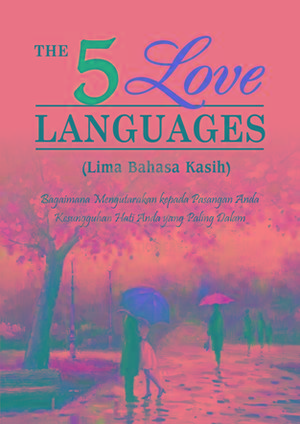
The 5 Love Language (Lima Bahasa Kasih)

  • ISBN 13 : 9786022002536
  • Judul : The 5 Love Language (Lima Bahasa Kasih)
  • Pengarang : Gary Chapman,  
  • Penerbit : Karisma
  • Klasifikasi : 128.46
  • Call Number : 128.46 GAR t
  • Bahasa : Indonesia
  • Penaklikan : 324 hlm;18 cm
  • Halaman : 0
  • Ketersediaan :
    2018-35546-0010
    Tersedia di Pustaka Kubang Putih - UIN Sjech M. Djamil Djambek Bukittinggi
    2018-35546-0009
    Tersedia di Pustaka Kubang Putih - UIN Sjech M. Djamil Djambek Bukittinggi
    2018-35546-0008
    Tersedia di Pustaka Kubang Putih - UIN Sjech M. Djamil Djambek Bukittinggi
    2018-35546-0007
    Tersedia di Pustaka Kubang Putih - UIN Sjech M. Djamil Djambek Bukittinggi
    2018-35546-0006
    Tersedia di Pustaka Kubang Putih - UIN Sjech M. Djamil Djambek Bukittinggi
    2018-35546-0005
    Tersedia di Pustaka Kubang Putih - UIN Sjech M. Djamil Djambek Bukittinggi
    2018-35546-0004
    Tersedia di Pustaka Kubang Putih - UIN Sjech M. Djamil Djambek Bukittinggi
    2018-35546-0003
    Tersedia di Pustaka Kubang Putih - UIN Sjech M. Djamil Djambek Bukittinggi
    2018-35546-0002
    Tersedia di Pustaka Kubang Putih - UIN Sjech M. Djamil Djambek Bukittinggi
    2018-35546-0001
    Tersedia di Pustaka Kubang Putih - UIN Sjech M. Djamil Djambek Bukittinggi

The Great Mutual Fund Trap

How Americans Are Losing Billions to the Mutual Fund and Brokerage Industries-- and How You Can Earn More with Less Risk

Convinced that your star mutual fund manager will help you beat the market? Eager to hear the latest stock picking advice on CNBC? FORGET ABOUT IT! The Great Mutual Fund Trap shows that the average mutual fund consistently underperforms the market, and that strategies for picking above-average funds -- everything from past performance to expert rankings -- are useless. Picking individual stocks on the advice of brokers and analysts works no better. The only sure things are the fees and commissions you’ll pay. Fortunately, the news is not all bad. Investors willing to ignore the constant drumbeat of “trade frequently,” “trust the experts,” and “beat the market” now have the opportunity to do better. Using new investing products investors can earn higher returns with lower risks. Drawing on their years of Wall Street, Treasury and Federal Reserve experience, Gary Gensler and Gregory Baer offer a fresh and realistic look at how money is managed in America. From new indexing strategies to risk-managed stock selection, The Great Mutual Fund Trap offers investors an escape from high costs and immunity from seductive marketing messages. From the Hardcover edition.

From new indexing strategies to risk-managed stock selection, The Great Mutual Fund Trap offers investors an escape from high costs and immunity from seductive marketing messages. From the Hardcover edition.

Dumb Things Smart Christians Believe

Misbeliefs that Keep Us From Experiencing God's Grace

Gary Kinnaman contends that many Christians are blinded by what he calls "popular and nonbiblical notions" of God. Applying personal anecdotes, stories from the lives of others, and a large dose of humor, the author challenges ten beliefs that are obstacles to the experience of God's love and providence. With a lighthearted touch, the author rescues readers from stubborn religious lies, such as God grades on a curve; the better you are, the bigger the blessing. And whoppers, such as if God leads you to something, everything will work out just great. Witty and engaging, Kinnaman may offend Christians of all traditions as he provokes them to think more deeply about their faith and their behavior.

... the converted slave trader who wrote 'Amazing Grace'—persuaded Wilberforce
that Godwanted him to stayin politics ratherthan entertheministry. 'TheLord has
raised you up for the goodof the nation.' “After much prayer and thought
Wilberforce concluded that Newton was right. God was calling him to champion
the libertyof the oppressed—as a Parliamentarian. 'My walk,' he wrote in his
journal in 1788, 'is apublicone. My businessis inthe world; and I must mix in the
assemblies of ...

Logic Minimization Algorithms for VLSI Synthesis

The roots of the project which culminates with the writing of this book can be traced to the work on logic synthesis started in 1979 at the IBM Watson Research Center and at University of California, Berkeley. During the preliminary phases of these projects, the impor tance of logic minimization for the synthesis of area and performance effective circuits clearly emerged. In 1980, Richard Newton stirred our interest by pointing out new heuristic algorithms for two-level logic minimization and the potential for improving upon existing approaches. In the summer of 1981, the authors organized and participated in a seminar on logic manipulation at IBM Research. One of the goals of the seminar was to study the literature on logic minimization and to look at heuristic algorithms from a fundamental and comparative point of view. The fruits of this investigation were surprisingly abundant: it was apparent from an initial implementation of recursive logic minimiza tion (ESPRESSO-I) that, if we merged our new results into a two-level minimization program, an important step forward in automatic logic synthesis could result. ESPRESSO-II was born and an APL implemen tation was created in the summer of 1982. The results of preliminary tests on a fairly large set of industrial examples were good enough to justify the publication of our algorithms. It is hoped that the strength and speed of our minimizer warrant its Italian name, which denotes both express delivery and a specially-brewed black coffee.

The proof (omitted) follows from the fact that each cube of F must be orthogonal to
all the cubes of F. This translates directly into the statement that each row of M is
a column cover of M. 3.6 Simplify We now illustrate the use of the unate recursive
paradigm to construct a heuristic minimization algorithm, SIMPLIFY. Even though
this is not one of the algorithms of ESPRESSO-II, we discuss it for illustrative
purposes, and also because it has proven to be an extremely valuable algorithm
in ...

The Action Research Dissertation

A Guide for Students and Faculty

The first edition of The Action Research Dissertation: A Guide for Students and Faculty was a first-of-its-kind reference, distilling the authors’ decades of action research experience into a handy guide for graduate students. The Second Edition continues to provide an accessible roadmap that honors the complexity of action research, while providing an overview of how action research is defined, its traditions and history, and the rationale for using it. Authors Kathryn Herr and Gary L. Anderson demonstrate that action research is not only appropriate for a dissertation, but also is a deeply rewarding experience for both the researcher and participants. This practical book demonstrates how action research dissertations are different from more traditional dissertations and prepares students and their committees for the unique dilemmas they may face, such as validity, positionality, design, write-up, ethics, and dissertation defense.

that allows the researcher to reflect on the research process as well as the
findings, which seldom can be easily formulated as propositional knowledge.
Finally, action research has grown out of very different research traditions and
has ...

Putting Writing Research into Practice

Applications for Teacher Professional Development

What are the most effective methods for teaching writing across grade levels and student populations? What kind of training do teachers need to put research-validated methods into practice? This unique volume combines the latest writing research with clear-cut recommendations for designing high-quality professional development efforts. Prominent authorities describe ways to help teachers succeed by using peer coaching, cross-disciplinary collaboration, lesson study, and other professional development models. All aspects of instruction and assessment are addressed, including high-stakes writing assessments, applications of technology, motivational issues, writing in different genres and subject areas, and teaching struggling writers.

Science, technology, society, and the environment (STSE) issues, 118 Science
Activities journal, 119 Science and ... 23–24 Script, struggling writers and, 232–
233 Self Regulated Strategy Development (SRSD) elementary literacy and, ...

Evolutionary Computation in Bioinformatics

This book offers a definitive resource that bridges biology and evolutionary computation. The authors have written an introduction to biology and bioinformatics for computer scientists, plus an introduction to evolutionary computation for biologists and for computer scientists unfamiliar with these techniques.

Mol. Biol., 215:403-410. Anabarasu, L. A. (1998). Multiple sequence alignment
using parallel genetic algorithms. In The Second Asia-Pacific Conference on
Simulated Evolution (SEAL-98), Canberra, Australia (B. McKay, X. Yao, C. S.
Newton, ...