Sebanyak 564 item atau buku ditemukan

Logic Programming '87

Proceedings of the 6th Conference Tokyo, Japan, June 22-24, 1987

This volume contains most of the papers presented at the 6th Logic Programming Conference held in Tokyo, June 22-24, 1987. It is the successor of Lecture Notes in Computer Science volumes 221 and 264. The contents cover foundations, programming, architecture and applications. Topics of particular interest are constraint logic programming and parallelism. The effort to apply logic programming to large-scale realistic problems is another important subject of these proceedings.

CHASSIS, FUJITSU LIMITED 140, Miyamoto, Numazu, Shizuoka 410-03, Japan
ABSTRACT This paper is concerned with an algorithm for identifying an unknown
regular language from examples of its members and non-members. The
algorithm is based on the model inference algorithm given by Shapiro. In our
setting, however, a given first order language for describing a target logic
program has countably many unary predicate symbols: qo, qi, q%, . . .. On the
other hand, the oracle ...

Progress in Artificial Intelligence. Knowledge Extraction, Multi-agent Systems, Logic Programming, and Constraint Solving

10th Portuguese Conference on Artificial Intelligence, EPIA 2001, Porto, Portugal, December 17-20, 2001. Proceedings

This book constitutes the refereed proceedings of the 10th Portuguese Conference on Artificial Intelligence, EPTA 2001, held in Porto, Portugal, in December 2001. The 21 revised long papers and 18 revised short papers were carefully reviewed and selected from a total of 88 submissions. The papers are organized in topical sections on extraction of knowledge from databases, AI techniques for financial time series analysis, multi-agent systems, AI logics and logic programming, constraint satisfaction, and AI planning.

This paper proposes a stochastic, and complete, backtrack search algorithm for
Propositional Satisfiability (SAT). In recent years, randomization has become
pervasive in SAT algorithms. Incomplete algorithms for SAT, for example the
ones based on local search, often re- sort to randomization. Complete algorithms
also resort to randomization. These include, state-of-the-art backtrack search SAT
algorithms that often randomize variable selection heuristics. Moreover, it is plain
that the ...

Logic Versus Approximation

Essays Dedicated to Michael M. Richter on the Occasion of His 65th Birthday

Nowadays knowledge-based systems research and development essentially employs two paradigms of reasoning. There are on the one hand the logic-based approaches where logic is to be understood in a rather broad sense; usually these approaches are used in symbolic domains where numerical calculations are not the core challenge. On the other hand we find approximation oriented reasoning; methods of these kinds are mainly applied in numerical domains where approximation is part of the scientific methodology itself. However, from an abstract level all these approaches do focus on similar topics and arise on various levels such as problem modeling, inference and problem solving techniques, algorithms and mathematical methods, mathematical relations between discrete and continuous properties, and are integrated in tools and applications. In accordance with the unifying vision and research interest of Michael M. Richter and in correspondence to his scientific work, this book presents 13 revised full papers advocating the integration of logic-based and approximation-oriented approaches in knowledge processing.

Problem-specific algorithms vs. heuristics, exact optimization vs. approximation
vs. heuristic solutions, guaranteed run time vs. expected run time vs.
experimental run time analysis. Here, a framework for a theory of randomized
search heuristics is presented. After a brief history of discrete optimization,
scenarios are discussed where randomized search heuristics are appropriate.
Different randomized se- arch heuristics are presented and it is argued why the
expected optimization time ...

Foundations of Fuzzy Logic and Soft Computing

12th International Fuzzy Systems Association World Congress, IFSA 2007, Cancun, Mexico, Junw 18-21, 2007, Proceedings

Annotation This book comprises a selection of papers from IFSA 2007 on new methods and theories that contribute to the foundations of fuzzy logic and soft computing. These papers were selected from over 400 submissions and constitute an important contribution to the theory and applications of fuzzy logic and soft computing methodologies. Soft Computing consists of several computing paradigms, including fuzzy logic, neural networks, genetic algorithms, and other techniques, which can be used to produce powerful intelligent systems for solving real-world problems. This book is intended to be a major reference for scientists and engineers interested in applying new computational and mathematical tools to achieve intelligent solution to complex problems. We consider that this book can also be used to get novel ideas for new lines of research, or to continue the lines of research proposed by the authors of the papers contained in the book. The 80 papers presented were carefully reviewed and selected form more than 400 submissions. The papers are organized in topical sections on relation between interval and fuzzy techniques, intuitionistic fuzzy sets and their applications, the application of fuzzy logic and soft computing in flexible querying, philosophical and human-scientific aspects of soft computing, search engine and information processing and retrieval, perception based data mining and decision making, joint model-based and data-based learning: the fuzzy logic approach, fuzzy possibilistic optimization, fuzzy trees, fuzzy logic theory, type-2 fuzzy logic, fuzzy logic applications, neural networks and control, as well as intelligent agents and knowledge ant colony.

12th International Fuzzy Systems Association World Congress, IFSA 2007,
Cancun, Mexico, Junw 18-21, 2007, Proceedings Patricia Melin. A Cultural
Algorithm with Operator Parameters Control for Solving Timetabling Problems⋆
Carlos Soza1, Ricardo Landa2, Mar ́ıa Cristina Riff1, and Carlos Coello2 1
Universidad Federico Santa Mar ́ıa, Departamento de Informática Av. Espa ̃na No
. 1680, Valpara ́ıso, Chile {csoza ...

The Logic of Logistics

Theory, Algorithms, and Applications for Logistics Management

Fierce competition in today's global market provides a powerful motivation for developing ever more sophisticated logistics systems. This book, written for the logistics manager and researcher, presents a survey of the modern theory and application of logistics. The goal of the book is to present the state-of-the-art in the science of logistics management. As a result, the authors have written a timely and authoritative survey of this field that many practitioners and researchers will find makes an invaluable companion to their work.

2 2.1 Examples of convex sets and nonconvex sets . . . . . . . . . . . . 16 2.2
Illustration of the definition of convex function . . . . . . . . . . . 17 2.3 Illustration of the
definition of subgradient . . . . . . . . . . . . . 22 4.1 An example for the minimum
spanning tree-based algorithm with n =18 . . . . . . . . . . . . . . . . . . . . . . . . . . . . . . 75
4.2 An example for the nearest-insertion algorithm with n =8 . . . . 78 4.3 The
matching and the optimal traveling salesman tour . . . . . . 79 4.4 An example for
Christofides' algorithm ...

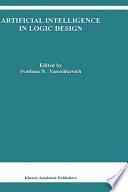
Artificial Intelligence in Logic Design

There are three outstanding points of this book. First: for the first time, a collective point of view on the role of artificial intelligence paradigm in logic design is introduced. Second, the book reveals new horizons of logic design tools on the technologies of the near future. Finally, the contributors of the book are twenty recognizable leaders in the field from the seven research centres. The chapters of the book have been carefully reviewed by equally qualified experts. All contributors are experienced in practical electronic design and in teaching engineering courses. Thus, the book's style is accessible to graduate students, practical engineers and researchers.

from Mishchenko's and our algorithms confirmed the above observation. The
decision diagram based exact algorithms are also inefficient for larger difficult
problem instances (e.g. for benchmarks “Flag” and “Mashroom” having 28 and 22
inputs, correspondingly (Mishchenko et al. 2000)). 5.2. QuickScan Inefficiency of
exact algorithms for larger instances of MISP motivates the development of faster
heuristic algorithms. Although the heuristic algorithms cannot guarantee the
optimal ...

Computation, Logic, Games, and Quantum Foundations - The Many Facets of Samson Abramsky

Essays Dedicted to Samson Abramsky on the Occasion of His 60th Birthday

This Festschrift volume, published in honor of Samson Abramsky, contains contributions written by some of his colleagues, former students, and friends. In celebration of the 60th birthday of Samson Abramsky, a conference was held in Oxford, UK, during May 28-30, 2010. The papers in this volume represent his manifold contributions to semantics, logic, games, and quantum mechanics.

This paper studies one of the best-known quantum algorithms — Shor's
factorisation algorithm — via categorical distributivity. A key aim of the paper is to
provide a minimal set of categorical requirements for key parts of the algorithm, in
order to establish the most general setting in which the required operations may
be performed efficiently. We demonstrate that Laplaza's theory of coherence for
distributivity [13,14] provides a purely categorical proof of the operational
equivalence of ...

Inductive Logic Programming

10th International Conference, ILP 2000, London, UK, July 24-27, 2000 Proceedings

Shan-HweiNienhuys-Cheng(UniversityofRotterdam,Netherlands) WilliamCohen(WhizbangsLabs,USA) LucDeRaedt(UniversityofFreiburg,Germany) Sa?soD?zeroski(Jo?zefStefanInstitute,Ljubljana) PeterFlach(UniversityofBristol,UK) AlanFrisch(UniversityofYork,UK) KoichiFurukawa(UniversityofKeio,Japan) RoniKhardon(UniversityofEdinburgh,UK) J¨org-UweKietz(SwissLife,Switzerland) NadaLavra?c(Jo?zefStefanInstitute,Slovenia) JohnLloyd(AustralianNationalUniversity,Australia) StanMatwin(UniversityofOttawa,Canada) RaymondMooney(UniversityofTexas,USA) StephenMuggleton(UniversityofYork,UK) DavidPage(UniversityofWisconsin,USA) BernhardPfahringer(UniversityofWaikato,NewZealand) C´elineRouveirol(Universit´edeParis-Sud,France) ClaudeSammut(UniversityofNewSouthWales,Australia) ´ Mich`eleSebag(EcolePolytechnique,France) AshwinSrinivasan(UniversityofOxford,UK) PrasadTadepalli(OregonStateUniversity,USA) StefanWrobel(UniversityofMagdeburg,Germany) AkihiroYamamoto(UniversityofHokkaido,Japan) Additional Referees ´ ErickAlphonse(Universit´edeParis-Sud,France) LiviuBadea(NationalInstituteforResearchandDevelopmentinInformatics, Romania) DamjanDemsar(Jo?zefStefanInstitute,Slovenia) ElisabethGoncalves(Universit´edeParis-Sud,France) MarkoGrobelnik(Jo?zefStefanInstitute,Slovenia) ClaireKennedy(UniversityofBristol,UK) DanielKudenko(UniversityofYork,UK) JohanneMorin(UniversityofOttawa,Canada) TomonobuOzaki(KeioUniversity,Japan) EdwardRoss(UniversityofBristol,UK) LjupcoTodorovski(Jo?zefStefanInstitute,Slovenia) V´eroniqueVentos(Universit´edeParis-Sud,France) VIII ProgramCommitteeandReferees Sponsors of ILP2000 ILPNet2,TheEuropeanNetworkofExcellenceinInductiveLogicProgramming MLNet,TheEuropeanNetworkofExcellenceinMachineLearning CompulogNet,TheEuropeanNetworkofExcellenceinComputationalLogic Table of Contents IInvitedPaper ILP:JustDoIt. . . . . . . . . . . . . . . . . . . . . . . . . . . . . . . . . . . . . . . . . . . . . . . . . . . . 3 DavidPage II Contributed Papers ANewAlgorithmforLearningRangeRestrictedHornExpressions. . . . . . . 21 MartaArias,RoniKhardon ARe?nementOperatorforDescriptionLogics. . . . . . . . . . . . . . . . . . . . . . . . . 40 LiviuBadea,Shan-HweiNienhuys-Cheng ExecutingQueryPacksinILP . . . . . . . . . . . . . . . . . . . . . . . . . . . . . . . . . . . . . . . 60 HendrikBlockeel,LucDehaspe,BartDemoen,GerdaJanssens, JanRamon,HenkVandecasteele ALogicalDatabaseMiningQueryLanguage . . . . . . . . . . . . . . . . . . . . . . . . . . 78 LucDeRaedt Induction of Recursive Theories in the Normal ILP Setting: Issues and Solutions . . . . . . . . . . . . . . . . . . . . . . . . . . . . . . . . . . . . . . . . . . . . . . . . . . . . . . . . . 93 FlorianaEsposito,DonatoMalerba,FrancescaA. Lisi ExtendingK-MeansClusteringtoFirst-OrderRepresentations. . . . . . . . . . . 112 MathiasKirsten,StefanWrobel TheoryCompletionUsingInverseEntailment . . . . . . . . . . . . . . . . . . . . . . . . . . 130 StephenH. Muggleton,ChristopherH. Bryant SolvingSelectionProblemsUsingPreferenceRelationBasedonBayesian Learning. . . . . . . . . . . . . . . . . . . . . . . . . . . . . . . . . . . . . . . . . . . . . . . . . . . . . . . . . . 147 TomofumiNakano,NobuhiroInuzuka ConcurrentExecutionofOptimalHypothesisSearchforInverse Entailment. . . . . . . . . . . . . . . . . . . . . . . . . . . . . . . . . . . . . . . . . . . . . . . . . . . . . . . . 165 HayatoOhwada,HiroyukiNishiyama,FumioMizoguchi UsingILPtoImprovePlanninginHierarchicalReinforcementLearning. . . 174 MarkReid,MalcolmRyan X TableofContents TowardsLearninginCARIN-ALN. . . . . . . . . . . . . . . . . . . . . . . . . . . . . . . . . . . 191 C´elineRouveirol,V´eroniqueVentos InverseEntailmentinNonmonotonicLogicPrograms. . . . . . . . . . . . . . . . . . . 209 ChiakiSakama ANoteonTwoSimpleTransformationsforImprovingtheE?ciencyofan ILPSystem . . . . . . . . . . . . . . . . . . . . . . . . . . . . . . . . . . . . . . . . . . . . . . . . . . . . . . . 225 V´?torSantosCosta,AshwinSrinivasan,RuiCamacho SearchingtheSubsumptionLattic

10th International Conference, ILP 2000, London, UK, July 24-27, 2000
Proceedings James Cussens, Alan Frisch. A New Algorithm for Learning Range
Restricted Horn Expressions⋆ (Extended Abstract) Marta Arias and Roni
Khardon Division of Informatics, University of Edinburgh The King's Buildings,
Edinburgh EH9 3JZ, Scotland {marta ...

Functional and Constraint Logic Programming

18th International Workshop, WFLP 2009, Brasilia, Brazil, June 28, 2009, Revised Selected Papers

This book constitutes the thoroughly refereed post-conference proceedings of the 18th International Workshop on Functional and Constraint Logic Programming, WFLP 2009, held in Brasilia, Brazil, in June 2009 as part of RDP 2009, the Federated Conference on Rewriting, Deduction, and Programming. The 9 revised full papers presented together with 2 invited papers were carefully reviewed and selected from 14 initial workshop contributions. The papers cover current research in all areas of functional and constraint logic programming including typical areas of interest, such as foundational issues, language design, implementation, transformation and analysis, software engineering, integration of paradigms, and applications.

This paper presents a taxonomy of some exact, right-to-left, string-matching
algorithms. The taxonomy is based on results obtained by using logic program
transformation over a naive and nondeterministic specification. A derivation of the
search part and some notes about the preprocessing part of each algorithm is
presented. The derivations show several design decisions behind each algorithm
, and allow us to organize the algorithms within a taxonomic tree, giving us a
better ...

Fuzzy Logic Augmentation of Nature-Inspired Optimization Metaheuristics

Theory and Applications

This book describes recent advances on fuzzy logic augmentation of nature-inspired optimization metaheuristics and their application in areas such as intelligent control and robotics, pattern recognition, time series prediction and optimization of complex problems. The book is organized in two main parts, which contain a group of papers around a similar subject. The first part consists of papers with the main theme of theoretical aspects of fuzzy logic augmentation of nature-inspired optimization metaheuristics, which basically consists of papers that propose new optimization algorithms enhanced using fuzzy systems. The second part contains papers with the main theme of application of optimization algorithms, which are basically papers using nature-inspired techniques to achieve optimization of complex optimization problems in diverse areas of application.

Theory and Applications Oscar Castillo, Patricia Melin. Table 12 Simulation
results for the sum squared function Bat algorithm Fuzzy Bat algorithm Number of
bats Best Number of bats Best 30 0.000006 10 0.00899885 The results of the
tests of the Sum Squared function between the original method and the proposed
one taking the best result of 30 experiments for each method are shown in Table
12.