Sebanyak 493 item atau buku ditemukan

Multimedia Interface Design in Education

What the book is about This book is about the theory and practice of the use of multimedia, multimodal interfaces for leaming. Yet it is not about technology as such, at least in the sense that the authors do not subscribe to the idea that one should do something just because it is technologically possible. 'Multimedia' has been adopted in some commercial quarters to mean little more than a computer with some form of audio ar (more usually) video attachment. This is a trend which ought to be resisted, as exemplified by the material in this book. Rather than merely using a new technology 'because it is there', there is a need to examine how people leam and eommunicate, and to study diverse ways in which computers ean harness text, sounds, speech, images, moving pietures, gestures, touch, etc. , to promote effective human leaming. We need to identify which media, in whieh combinations, using what mappings of domain to representation, are appropriate far which educational purposes . . The word 'multimodal ' in the title underlies this perspective. The intention is to focus attention less on the technology and more on how to strueture different kinds of information via different sensory channels in order to yield the best possible quality of communication and educational interaction. (Though the reader should refer to Chapter 1 for a discussion of the use of the word 'multimodal' . ) Historically there was little problem.

Chapter 3 “Rights in the Mirror”: An Interactive Video Drama Programme About
Human Rights Education Joseph Nolthuis Educa Video-Utrecht School of Arts,
Stadhouderslaan 27, Utrecht, The Netherlands, 3583 JB Editors' Introduction This
chapter describes a case study that is unusual both in its theoretical inspiration
and in the domain of education to which it is applied. The multimedia system “
Rights in the Mirror assists student teachers to learn about teaching human rights
issues.


Integrating ERP, CRM, Supply Chain Management, and Smart Materials

Organizations enjoy two kinds of strategic advantages. One is transitory: being in the right place with the right products at the right time. The other comes from having first class management and instituting processes that mobilize an organization, keeping in ahead of the competition. Which would you like to count on for your organization's success? Integrating ERP, CRM, Supply Chain Management, and Smart Materials explores how to create business opportunities and reap savings by: Restructuring and updating of ERP and CRM software as it integrates supply chain management and delivers new killer applications Evolving opportunities that will develop from the implementation of smart materials, automatic identification, classification systems, and quality assurance projects Auditing the implementation, operation, and maintenance of ERP and CRM software as well as the corrective action taken on the basis of results Internet commerce, online supply chain, and advances in technology - all available at increasingly lower costs - make systems of the past obsolete. However, just as new technology creates new opportunities, it can also create unforeseen consequences. By binding a wealth of interdependent issues between the covers of one book, Integrating ERP, CRM, Supply Chain Management, and Smart Materials gives you the tools you need to create proprietary, high value-added solutions.

In commercial banking, core functions are accepting customer deposits, making
loans to customers, proceeding with credit and actuarial assessments, managing
the bank's own investments, underwriting financial issues, developing and
managing new products, and trading in securities. Information technology (IT)
solutions should help all of these channels in an able manner, both individually
and in the aggregate. Therefore, the implementation of IT should be rigorously
audited to ...

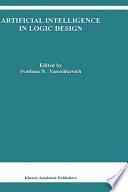
Artificial Intelligence in Logic Design

There are three outstanding points of this book. First: for the first time, a collective point of view on the role of artificial intelligence paradigm in logic design is introduced. Second, the book reveals new horizons of logic design tools on the technologies of the near future. Finally, the contributors of the book are twenty recognizable leaders in the field from the seven research centres. The chapters of the book have been carefully reviewed by equally qualified experts. All contributors are experienced in practical electronic design and in teaching engineering courses. Thus, the book's style is accessible to graduate students, practical engineers and researchers.

from Mishchenko's and our algorithms confirmed the above observation. The
decision diagram based exact algorithms are also inefficient for larger difficult
problem instances (e.g. for benchmarks “Flag” and “Mashroom” having 28 and 22
inputs, correspondingly (Mishchenko et al. 2000)). 5.2. QuickScan Inefficiency of
exact algorithms for larger instances of MISP motivates the development of faster
heuristic algorithms. Although the heuristic algorithms cannot guarantee the
optimal ...

Perspectives on urbanization in Pakistan, a society in transition

proceedings of the 10th annual conference, 21-23 January 1977

URBANIZATION AND OBSCENITY Syed Saeed Abbas Musvee Introduction
Phenomenal rates of rural-urban drifts, as a consequence of uninhibited growth
of industrial suburbia around almost all the major towns of the country, is today ...